Why the pattern matters
A single fasting blood test and a continuous record answer different questions. CGM can show what happens between meals, overnight and during activity. In HLC care, its value comes from linking a repeated pattern to a realistic habit change, rather than treating every rise after food as a problem.
From sensor placement to review
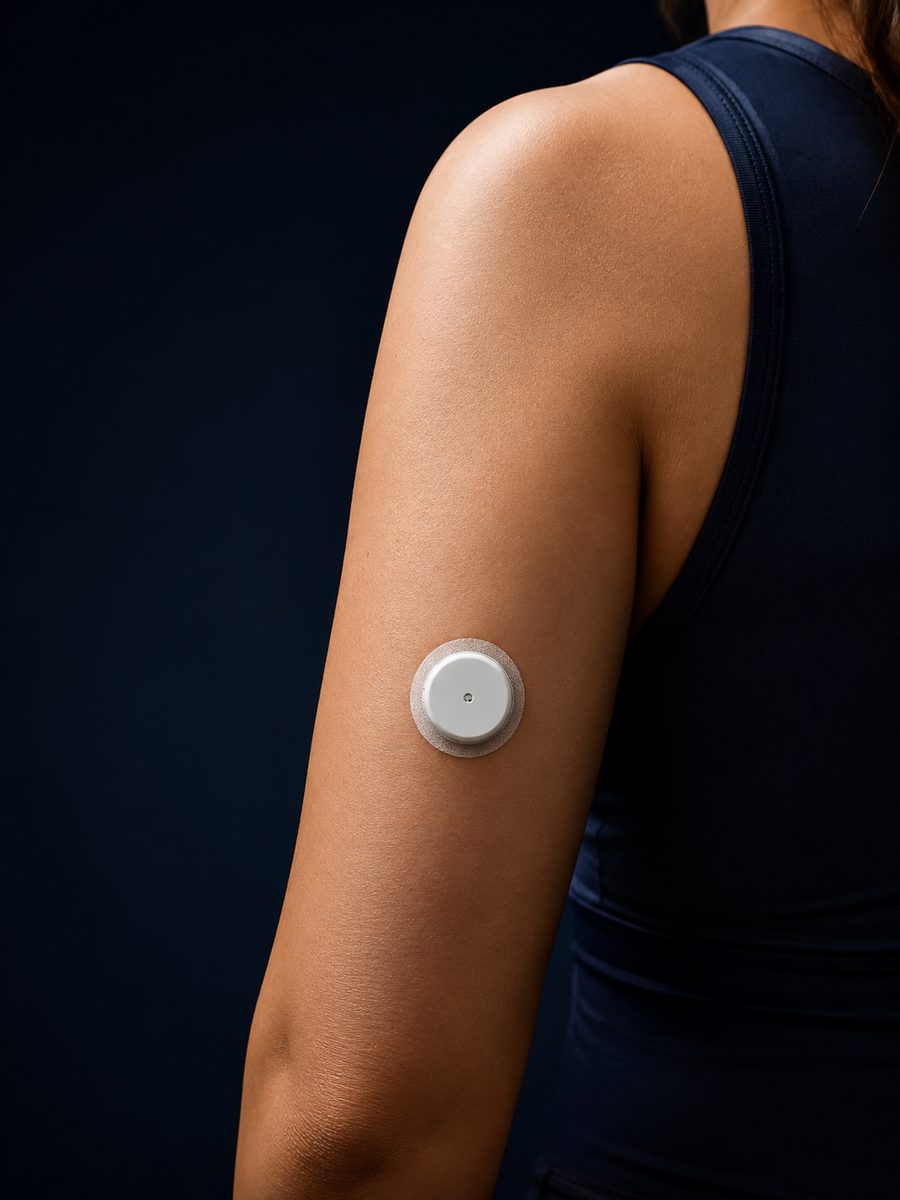
A small sensor sits under the skin and estimates glucose in interstitial fluid. The clinic explains placement, the compatible app or reader, skin care and the agreed wearing period. During everyday use, record meals, activity, sleep and relevant symptoms so the reviewer can see what surrounds each pattern.
What a useful report shows
A summary may show the daily glucose trace, average glucose, variation and time within a clinician-defined range. Meal and activity notes help distinguish recurring responses from isolated readings. Units may be mmol/L or mg/dL; compare like with like and use ranges chosen for your clinical situation.
How to avoid overinterpreting the sensor
Interstitial readings can lag behind blood glucose, especially during rapid change. Sensor problems or pressure on the sensor can also distort a reading. Follow the device and clinician instructions when a result does not match how you feel. CGM does not replace the standard tests used to diagnose diabetes.
For someone without diabetes, the useful outcome is usually a focused review of habits and overall metabolic risk. A perfectly flat curve is not a health goal, and more sensor data do not automatically mean better long-term health.