Why we look beyond weight
During weight reduction, preserving muscle can be as important as reducing excess fat. In an exercise or nutrition plan, a repeated measurement can help show whether the direction of change fits the goal. Strength and physical performance add information that a body-composition estimate cannot provide on its own.
What bioimpedance measures
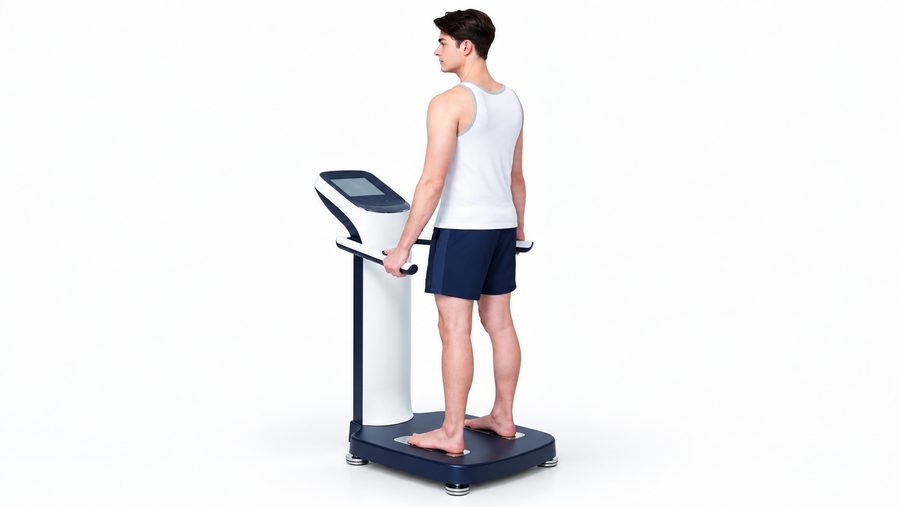
Bioelectrical impedance analysis, or BIA, measures how a small electrical current passes through the body. A multi-frequency system uses these signals to estimate body water, lean tissue and fat. A segmental report can show the arms, legs and trunk separately, making differences between regions easier to discuss.
Depending on the ordered assessment, the report may include skeletal muscle mass, body-fat percentage, an estimate of visceral fat, body-water distribution and phase angle. These are different measurements and estimates, not a single definitive score of health. A device’s available features do not mean that every analysis is included in your visit.
Muscle quantity and muscle function
A hand-grip dynamometer measures how strongly you can squeeze with each hand. This complements muscle estimates because having more lean tissue does not always mean having more functional strength. Results are interpreted with age, body size, activity, pain and other factors affecting effort. The Prague catalogue pairs body composition with grip-strength assessment; other clinic configurations are confirmed separately.
Make repeat measurements useful
Meals, exercise, hydration and time of day can affect BIA results. Follow the clinic’s preparation instructions and aim for similar conditions at follow-up. Tell the team about pregnancy, an implanted electronic device or a condition affecting fluid balance so it can choose a suitable method.
How the result informs your plan
The useful question is what to do with the pattern: adjust resistance training, review protein and overall food intake, investigate an unexpected change or maintain an approach that is working. The clinician or nutrition professional considers trends alongside symptoms and performance; a short-term change in estimated muscle may reflect water rather than a real gain or loss of tissue.